
One of the great joys of summer must be listening to the male blackbirds singing their hearts out, trying for all they’re worth to find a mate. I have always felt for these beautiful creatures, whose songs are the very essence of English summertime. I found myself this week wondering what happens to the poor blackbird who cannot find a mate. You know which ones they are – you recognise their song, evening after evening. Until, eventually, it stops.
Do they become sad, or angry? Do they perhaps become incel blackbirds?
Are they raging against the more hunky, bad boy birds who’ve nabbed the tastiest hens, only to dump them when they find the next pretty one? Do they blame the blackbird state (whatever that may be)? The woke blackbird liberals? Maybe it’s the thrushes – they’ve always been pushing their luck, the spotty bastards.
They could blame robins, but they’d rapidly regret that, believe you me. Robins are total headcases and the Krays of the garden bird world.
No, the truth is, they accept their situation, and they get ready to defend their territory, and prepare for next spring when they’ll try again. They never give up and they live in hope that their luck will change.
Acceptance. That’s a thing. Let’s come back to that.
Now, I’d like to tell you a little story, if you’ll allow me. Some of you might have read a version of it, since I referred to it a month back, when I first became aware of it’s meaning in my life. It has a bearing on acceptance, on hope, on living in a land of uncertainty, and on what love means.
Imagine for a moment…
It’s 1982. You’re probably 19 or 20 years old. You were conscripted into the Argentinian Army not very long ago, most likely with scant enthusiasm, if any – certainly, you had no choice. You had to go.
Your training was rudimentary, basic and entirely inadequate for the tasks ahead. Within weeks of completing that training, you were sent away, in total secrecy on a mission of apparent national importance to your ‘motherland’. On arrival in this barren new landscape, which you’re told are the Malvinas, you were sent out with a hundred of your comrades onto a freezing mountainside overlooking a grey south Atlantic bay, with the wind howling incessantly.
You dug in to the rocky hillside as best you could to find shelter, but the cold was biting and relentless. And your problems were, truly, just starting.
One freezing night, without warning, your world caved in and you were suddenly in the midst of an utterly demonic bombardment, one high explosive shell landing amongst you every four seconds. Bloody carnage and terror.
And then it stopped. But, most unfortunately for you, it stopped only for the gates of hell to open, as the Special Boat Squadron descended on you. Totally merciless, clinical and relentless, tasked with neutralising you and all your comrades, to enable an enemy armada to enter the bay without interference. Because that’s what the SBS do.
Somehow, and constantly fearing being cut down, you and a handful of comrades flee for your lives and in the darkness and confusion, escape down the rocky mountainside, and into the open, very rough country behind, running and stumbling blindly into the safety of the night.
After days of trudging and hiding from the enemy, many miles away, you find a small house, break in and take shelter. Somehow you manage to trap and kill two or three geese, but with no survival training, you cannot gut, pluck and cook them. You try to eat but the results are too horrific to contemplate and you stay hungry. Your life has rapidly plummeted into one of utter misery – filthy, starving, disorientated, and alone save for the six equally terrified and completely shattered and broken young men with you.
Then, early one morning, you hear helicopters approaching. You know they’re not ‘yours’. They have to be enemy. Your traumatic experience on Fanning Head, the bleak mountain from which you’d fled, suggests that you have minutes left on earth.
You see people in the distance briefly – soldiers. But are too scared to show yourself.
Then a shout. Apparently Spanish, but sounds curiously like a Gorbals-tinged dialect, not that you’d know that. Nothing happens for a few minutes, then another shout.
The sole Argentinian officer in your group ventures closer to the door of the tiny house, and opening it, waves a white cloth he has found. He is unarmed.
There is no volley of automatic fire. One by one, scared witless, you all follow, stumbling out on blistered and frostbitten feet, and falling onto the peaty turf, face down, still convinced that your lives are about to end within seconds.
But your life doesn’t end. You live. You live, to get married, to have children and grandchildren.
After being searched, you’re given water and cigarettes, and then you sit together, shivering, as another Royal Navy Sea King helicopter arrives. Within hours, you’re back with hundreds of other prisoners, and within days you’re back on Argentinian soil, well fed and with your injuries treated.
These men, I now know, had accepted their fate – they believed they were going to die, when they were discovered by the British, because that’s what they had seen as they fled.
But they wouldn’t die that freezing morning.
I was the commander of the troop of 28 Royal Marines Commandos that surrounded that house. I told the guys to hold their fire, and give them time to surrender. In so doing we were able to take them into our care as prisoners.
There was no way that I, or my Marines, would open fire on any building without knowing who was in there. We intended no harm to young soldiers who had lost everything and just wanted to go home to their parents, families and girlfriends.
That’s not heroism, or conspicuous courage or kindness. It is simply what any of us would have done, given the circumstances….. surely?
Amazingly, as some of you will know, thanks to the meticulous research of a young Argentinian historian named Agustin Vazquez, I am now in touch with two of those Argentinian soldiers, and if we can, we will meet one day for big hugs, laughs and a beer or two, with their comrades and a few of mine. In our sixties, and with the respect of one soldier for another.
Those poor men, to this day, believe God spoke to me that morning and asked me to spare them. They believe that they were given a second chance at life. But I don’t believe God did speak to me. I just did what all of you would have done. All of you.
It is a constant theme in life as I now see it. Life, as my friend Simon Boas says in his wonderful book “A Beginner’s Guide to Dying” is about love – for all.
Again, perhaps more on that shortly.
Very recently, I had the privilege to be asked to speak to the staff of a major London hospital ICU unit, as part of Men’s Health Week.
I talked about what an advanced, incurable cancer diagnosis feels like. From my perspective.
Clearly I wasn’t in any position to talk with any authority about the medical aspects of cancer (despite everything, what on earth do I know?), so this was purely about personal experience. I have discovered however, that everyone is different – as I’ve said before, cancer is an umbrella term encompassing more than 200 different diseases, and everyone who discovers they have it responds and reacts differently. That’s why it’s so hard to treat – there are common factors for sure, but there are literally millions of different paths, progressions and outcomes. I spoke for maybe 20 minutes, no doubt customarily incoherent and rambling, giving a talk in a manner with which so many of you will be wearyingly familiar.
I explained how I felt about what had happened to me, and what the treatment (which will continue until I eventually cark it, hopefully many years hence, because, in the words of James Brown, “I feel good!!”) has meant to my life.
I described the personal havoc, with plans for the future thrown into disarray. I talked of the intense and indescribable ebb and flow of emotion, the shock of losing so much that made me a man, the grasping for meaning, the disorientation. But in the midst of it all, so much love, kindness and human warmth.
One nurse asked me whether there was anything that anyone had told me that had made me more resilient and more able to cope with everything that prostate cancer had chucked at me.
Such a great question.
I thought for a while and could only say, in absolute honesty, no. Any resilience I have (I believe I am far from resilient or brave, truly – I just plod from one day to the next and try to keep smiling) has come from that one simple word.
Acceptance.
If you spend your precious days railing against why you have been picked on to be the reluctant recipient of this horrid disease, you will, at the very least, miss out on so many happy times. At worst, you’ll make yourself even more ill. Don’t do that, please.
I know he’s a bit of an acquired taste for many people, but I have to agree with Danny Baker on this topic. He rejected the idea of “fighting” his disease after being diagnosed with throat cancer. His view was that the oncologists, doctors, radiologists and nurses were the ones doing the fighting – Danny believed that his role was to provide the field to fight on – his body. I think he’s right, and at the same time, each of us in this rather unwelcome position has the power – indeed, the responsibility – to make that battlefield as advantageous to the medical teams as possible. That means eating healthily, drinking sensibly (steady now), listening to one’s body and maintaining the most positive mindset as possible.
Acceptance is key. Accept where you are, accept what has happened and start to build your new world of hope, fortitude, love and kindness for this world and everyone around you from there. Acceptance and surrender are not the same thing. Fight to stay alive when you can, but accept where you are. A tough distinction, I know, but it is real.
A while back, Dr Sue and I saw Guy Masterson’s brilliant one man telling of “Under Milk Wood” at Wilton’s Music Hall in Spitalfields. I went back to read Dylan Thomas’ works after seeing it, and in particular, his poem “Do not go gentle into that good night”. Dylan was a bit of a lad, wasn’t he? Didn’t muck about. His message in that poem, dedicated to his dying father, was to fight as hard as possible against death and embrace life.
Despite what I believe about acceptance, who could really argue with that? However, for me at least, Dylan’s final lines in that poem are the ones that matter the most..
“Do not go gentle into that good night.
Rage, rage against the dying of the light.”
He is right. Love life, and everything it gives you. Embrace every day, and find the beauty in everything you see. That’s hard sometimes, but it’s there…. Just look.
Where Dylan and I differ though, is this. Don’t “..rage against the dying of the light..”
Be the light. In whatever way you can, please be the light.
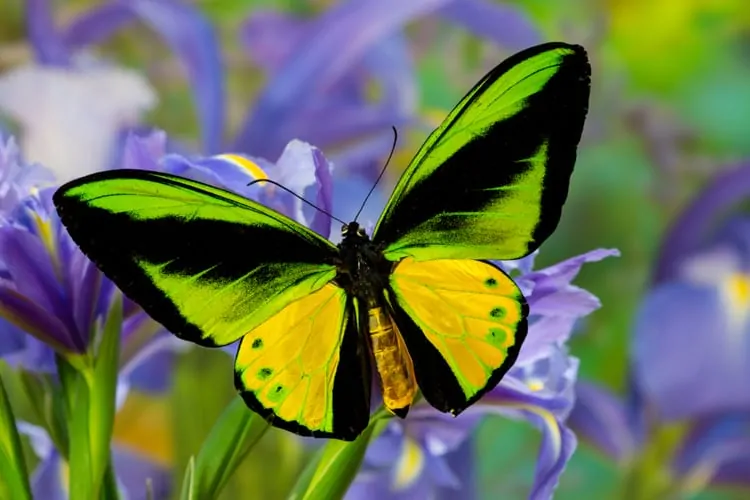
I read recently that butterflies have no notion of how beautiful their wings are, because they cannot see them. They can see each other’s wings, but don’t know that they have equally beautiful wings. I realised on reading this, that in my life, I am surrounded by some of the most magnificent butterflies, with wings of radiant beauty and fabulous iridescence and dazzling colour – without those ‘butterflies’ ever knowing the impact of their beauty on everyone. Especially on me.
My wife Susan, Emily and Tom, Charlie and Hannah and my darling baby granddaughter Annie, as well as all the wonderful friends and colleagues who make every day an opportunity and make my life such a joy to live, however short or long it may be.
Your wings are beyond beautiful and truly, you light up my world, all of you – if only you knew.
Thank you, as always, for reading x
Truly inspirational, Martin. I look forward to the next episode.
Beautiful sentiments Martin…..you are a fabulous butterfly x
Nicely written Martin…. Evocative & thought provoking…
Beautifully written Martin, always a joy to read your blog, totally uplifting
As ever, Martin, a wonderful piece. Please do think about compiling them into a book at some stage. They really do make a difference. With warmest wishes, Stuart
I really enjoyed reading this. Fantastic work. Thank you.
Beautiful and moving in equal measure. I love your phrase “Acceptance” and how you handle that positively. I was reminded, in the part where you talk about visiting some Argentinian Soldiers, of a project and theatre play produced roundabout 2017 I think called Minefield about the Falklands war – it is a project that reunites Argentine and British veterans from the Falklands/Malvinas war to explore what is left of it in their heads 34 years later. Not sure you have heard of it but I found it quite an interesting read. The link is here => https://lolaarias.com/minefield/?utm_source=chatgpt.com. I hope you find it interesting also.
Martin, you remain an inspiration my friend.
I have been reading your blog regularly as my partner has uncurable but treatable prostate cancer and found all your pieces so powerful and inspirational and every time read them I cry but from feeling greatful about the time we have had and will have and how much I love him!thank you Martin!